
How to Reduce Generator Noise
When to Choose a Silent Model
Generator noise is one of the most common concerns when businesses consider installing on-site power. Whether you’re operating near residential areas, staff workspaces, customers or sensitive environments, excessive noise can quickly become a problem — even if the generator itself performs perfectly.
The key question isn’t simply “Are generators noisy?” — it’s how much noise is acceptable for your site, and whether it can be reduced enough without compromising performance. This guide explains how generator noise is managed in practice, and when choosing a low-noise or silent generator is the right decision.

Why generator noise becomes a business issue
Noise rarely causes problems in isolation. It usually affects:
-
staff comfort and productivity
-
neighbours or nearby businesses
-
planning or environmental compliance
-
operating hours (especially overnight or 24/7 sites)
Older generators helped create the perception that all generators are loud, dirty and disruptive. Modern generator design has improved significantly — but noise remains a critical consideration, particularly as power demands increase.
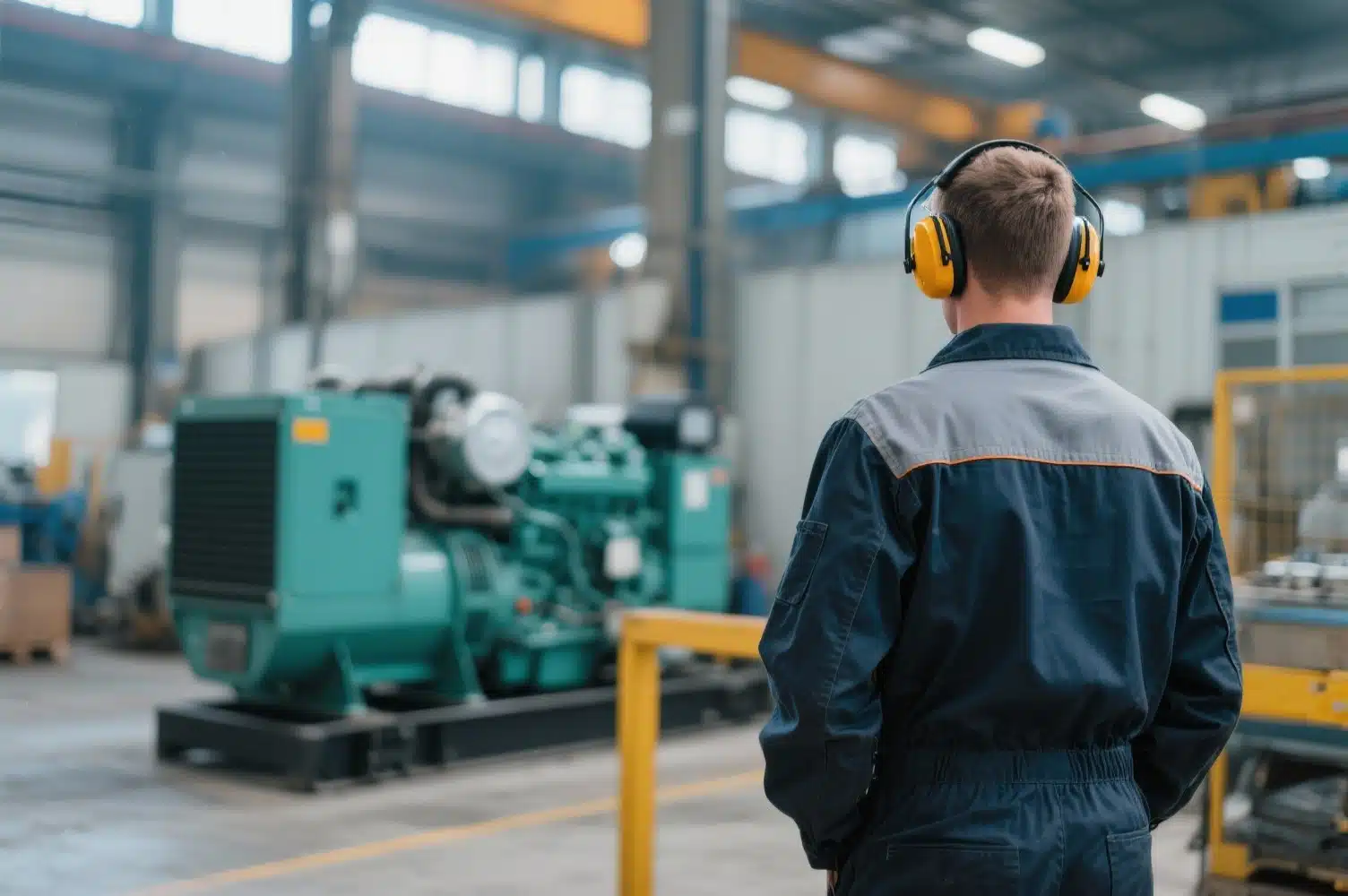
What actually causes generator noise?
From a business perspective, generator noise comes from four main sources:
-
the engine itself
-
airflow and exhaust systems
-
vibration transferred into surrounding structures
-
cooling fans and auxiliary equipment
As a general rule, larger generators produce more noise, simply because they move more air and generate more power. That doesn’t mean they must be loud, but it does mean noise control must be designed in, not treated as an afterthought.
How generator noise is measured
Generator noise is typically measured in dBA (decibels). To put this into context:
-
~70–75 dBA is similar to a vacuum cleaner or busy restaurant
-
Levels above this can cause discomfort, complaints or restrictions
Many commercial and industrial installations specify maximum permitted noise levels — particularly near offices, hospitals, schools or residential areas. The right solution depends on where the generator will operate and when, not just its power rating.
Ways to reduce generator noise (before choosing a silent model)
In many cases, generator noise can be reduced without needing a fully “silent” generator. Common approaches include:
Acoustic enclosures
Purpose-designed acoustic enclosures reduce airborne noise while maintaining airflow and service access.
Exhaust silencers and attenuation
Specialist mufflers reduce generator exhaust noise, which is often one of the loudest elements.
Anti-vibration mounting
Isolating vibration prevents noise transferring into floors, walls and nearby buildings.
Intelligent placement
Positioning the generator away from sensitive areas or using dedicated plant rooms can significantly reduce perceived noise.
For many sites, a standard generator with proper noise treatment is sufficient.
When choosing a silent generator makes sense
A low-noise or “silent” generator is usually the right choice when:
-
the generator is close to staff, customers or the public
-
operations run overnight or continuously
-
planning conditions impose strict noise limits
-
the site is in a residential or mixed-use area
-
noise complaints would disrupt operations or reputation
In environments such as healthcare, education, hospitality or urban commercial sites, noise tolerance is often as important as power output.
Comfort, compliance and long-term impact
Reducing generator noise isn’t just about comfort. Prolonged exposure to high noise levels can:
-
affect staff wellbeing and concentration
-
increase stress and fatigue
-
create compliance and reputational risks
-
limit operating hours
Choosing a quieter solution early often avoids costly retrofits later.
Designing the right low-noise solution
There is rarely a single “silent generator” that suits every site. The best outcomes come from:
-
understanding your site’s noise sensitivity
-
defining acceptable noise levels
-
designing noise control as part of the installation
-
balancing cost, performance and long-term operation
At Rehlko, noise reduction is considered at the design stage of every installation. Whether through bespoke acoustic enclosures, specialist attenuation or site-specific layouts, permitted sound levels are factored in alongside power, runtime and maintenance needs.
Next step
If generator noise could affect staff, neighbours or compliance at your site, now is the right time to assess whether noise mitigation alone is sufficient — or whether a low-noise generator is the better long-term solution.